Showing posts with label Honda. Show all posts

Friday, 30 October 2015

Toyota Auto Body Alphard Hercule Concept

Toyota Auto Body Alphard Hercule Concept

If vans have a reputation for being land yachts, why not make one into a literal rolling boat for the wealthy? The Alphard Hercule from Toyota Auto Body (a Toyota subsidiary) offers a yacht-rock take on the family hauler. From the cowcatcher grille to the folding canvas roof to the wraparound bench seats and crystal champagne flutes, the Hercule comes off as a minivan for Lex Luthor’s kids.
Toyota Auto Body Alphard Hercule Concept

Two years ago, Honda showed off the “Omni Traction Drive,” a wheel with special bands that could allow a vehicle to move sideways. The Honda Wander Stand envisions how Honda could put such an idea to use in the cramped alleys of Tokyo, with a two-seat self-driving vehicle that can scamper diagonally and park itself in tiny corners.
Honda Wander Stand

Several new cars have vanes that open or close at speed to improve aerodynamics, but what if a car could change its entire shape? Hence the Flesby, a project by Toyota satellite supplier Toyota Gosei that features several green air bags in place of bodywork. Depending on the driving situation, the bags change shape to look sportier or sleeker, like a Transformer made of Play-Doh.
Toyota Gosei Flesby

A quarter of Japan’s population is 65 or older, and the Tokyo show had a whole section devoted to personal scooters and powered wheelchairs. The Daihatsu Norioriwas designed to haul all those mobility solutions around, thanks to huge side doors, a sliding ramp, minimal ground clearance and self-driving features.
Daihatsu Noriori

“Noriori” is Japanese for “getting on and off.” Inside the van-let, the seats fold away so that wheelchairs can be parked in place.
Daihatsu Noriori side view

No automaker has ever recaptured the magic of the original Volkswagen bus, but the Suzuki Air Triser comes close. With a two-tone paint and airy cabin that can be reconfigured, the Air Triser was one of the few concepts that had some grounding in reality.
Suzuki Air Triser

When parked, the seats of the Air Triser can be folded several ways, like this near-camper effect. 
Suzuki Air Triser seats

All of the autonomous driving vehicles unveiled by automakers in Tokyo lacked two things: menace, and a robot body. Into that gap rushed Yamaha, which revealed the Motobot, a robot it says it’s developing to ride any given sport bike up to 124 mph on a racetrack. No word on when automakers would give their self-driving car systems the power to feel jealous.
Yamaha Motobot

Every auto show has a few obsessive answers to the question of “how do we get today’s tech-obsessed youth interested in cars?” Nissan’s exploration was called the Teatro For Dayz, and imagines a world where “share natives” expect to post every moment to social media
Nissan Teatro For Dayz

The Teatro For Dayz uses several projectors to cover the interior of the vehicle in video, patterns and incoming Snapchats. Of course, all of this overwhelms the actual act of driving, which the car takes care of on its own. Given today’s trends, Nissan may have a point.
Nissan Teatro For Dayz Interior

Of all the concepts at the Tokyo show, the Kikai was the sole representative of the spirit of hot-rodding. In some angles it looked like a moon buggy, in others there were hints of Ford hi-boy roadsters. While other concepts overflowed with tech, the Kikai doesn’t even have a radio
Toyota Kikai front view

Toyota said the Kikai was designed to show off the engineering usually hidden by bodywork. It seats three with the driver in the center—a move that was especially refreshing at this Tokyo show. The next Tokyo show two years from now will have even more robotic, high-tech creations; one only hopes there’s still room for the machines meant to make driving exciting.
Toyota Kikai Rear View

Monday, 11 August 2014

Road Test and Review: Honda Amaze

Road Test and Review: Honda Amaze


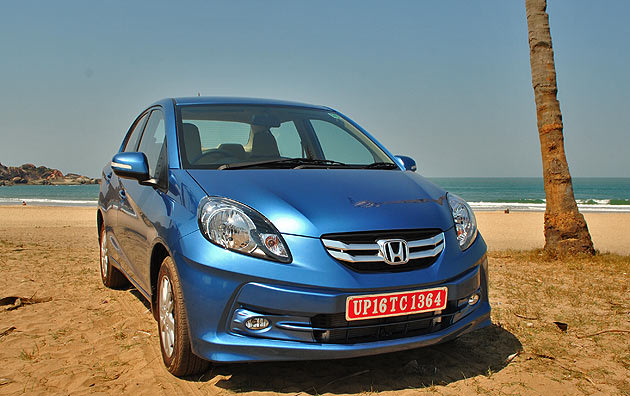
In the past couple of years, the Indian car industry introduced us to a series of new segments. Needless to say, the sub-4 metre segment emerged the most popular, thanks to the tax benefit it enjoys. But the carmakers’ desperate attempt to cash in on the lower tax rate left us with a handful of mediocre designs that were merely squeezed up variants of existing models. Finally, we have in the market a well-thought-out, a well-sculpted sub-4 metre sedan -- the Honda Amaze.
And that’s not all. With a 1.5L i-DTEC engine that’s exclusively developed for India, the Amaze marks Honda’s entry into the diesel segment. That fact itself makes the Amaze recognisable in the already crowded diesel segment, but has the Japanese carmaker got everything right with the Amaze to win the lost market share back? Let’s drive the Amaze to find out.

Design
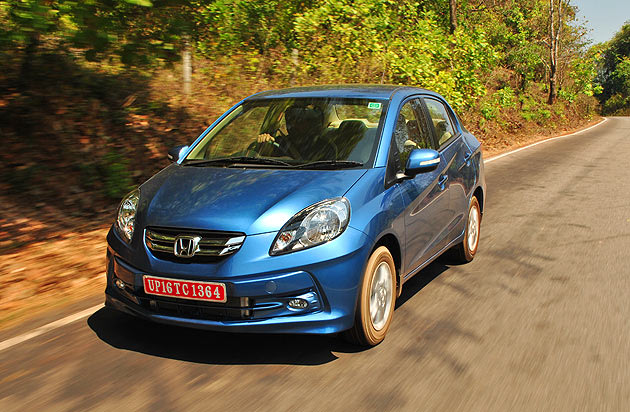
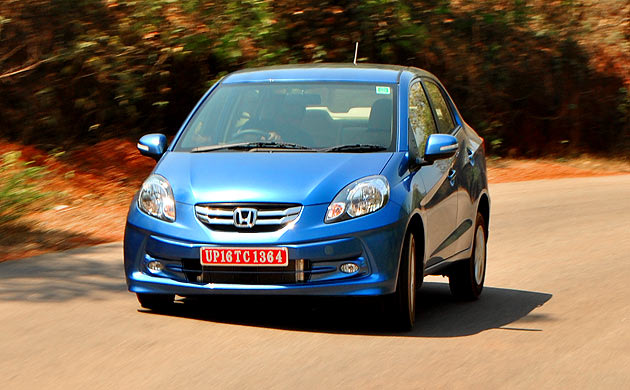
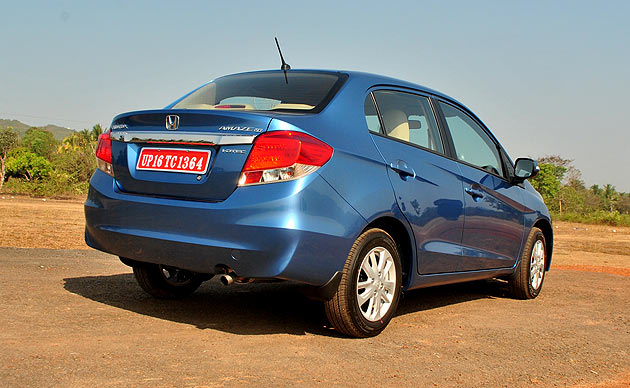
If you thought the Amaze is just the Brio with a boot slapped onto it, hey, you were wrong. Although the front half of the car is identical to the hatchback, designers have burnt the midnight oil to immaculately integrate the additional 380mm beyond the B-pillar. From the front, the Amaze can be distinguished by the twin-bar grille and a new bumper with subtle changes. The best design element of all is the two aggressive character lines in profile, which disguise the car’s compact dimensions and give it a full-grown sedan’s stance. The rear design of the Amaze is certainly the best in its class, owing to the seamless integration of the boot, stylish rear combination lamps and generous use of chrome.
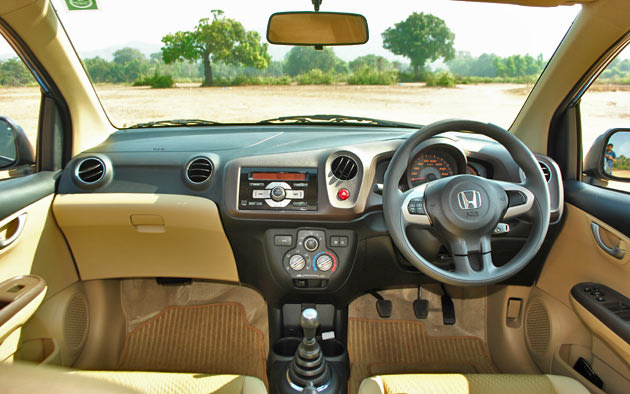
Inside, there's virtually nothing to separate the Amaze and the Brio. The dashboard layout is the same and the same hard plastics feature throughout. However, the high-quality bright fabric creates a cheerful aura and a premium feel in the cabin.
Space, Comfort and Convenience
Ask me one thing I liked most about the Amaze and I’ll tell you -- space. No matter where you’re sitting, there’s lots of space.  The front seats offer plenty of kneeroom, while six-footers will have no trouble getting comfortable in the rear. The Amaze’s roomy feel extends to the boot as well, which has a class-leading capacity of 400 litres.
The easy-to-live-with cabin offers a great driving position and logical dashboard. Driver seat is height adjustable and steering column collapsible. The interior is suitable for a long road trip with bolstered seats, lots of storage zones, two cup holders and four bottle holders.
Engine
In India, Honda and diesel were two words that never belonged in the same sentence, but not anymore. Even though it took three years for Honda to develop a diesel engine for India, they’ve got exactly what we wanted. First things first -- the 1.5 litre i-DTEC engine returns the highest fuel economy in the Indian passenger car segment of 25.8 km/l, as per test data. What’s more interesting is that the impressive mileage is achieved without any compromise on performance. It offers a maximum power output of 100PS@3600rpm and 200 Nm of torque @1750 rpm. The diesel engine is coupled to a five-speed manual transmission.
The Amaze will also be available with the Brio’s peppy 1.2-litre, 88bhp petrol engine, linked to either a five speed manual or a five-speed automatic transmission.
Performance, Ride and Handling
The 1.5 litre i-DTEC engine pulls smoothly from as low as 1200-1500 rpm with no bogs or hesitation. Power builds up in a very linear fashion that you wouldn’t notice the turbo kick in at 3000 rpm. It delivers plenty of mid and high end torque to keep you moving swiftly along the streets. However, compared to the popular 1.3 litre DDiS engine, the 1.5 litre i-DTEC is not as much fun to drive but certainly more practical and more efficient.
Since we are not used to engine noise in a Honda car, the i-DTEC might unexpectedly be audible inside the cabin. Otherwise, the cabin remains well- insulated against wind/road noise. The petrol Amaze, on the other hand, is typical Honda – silent, peppy and fun to drive.
The heavier diesel engine required a stiffer front suspension than the Brio, but not taking a toll on the ride quality. The steering is slightly heavier, hence confidence-inspiring and the handling is worlds better than that of the others in the segment.
The Amaze has a ground clearance of 165 mm, good enough to clear most speedbreakers and potholes. Overall, the steering, brake and throttle all help make this an easy car to drive happily.


Safety
The Amaze features Honda’s active and passive safety technologies including dual SRS front airbags, ABS, EBD, 3-point ELR seat belts and impact-mitigating headrests. The front body structure is equipped with Pedestrian injury mitigation technology designed to absorb impact energy.  The rear too has a shock absorbing structure which protects occupants in case of a rear crash.
Conclusion
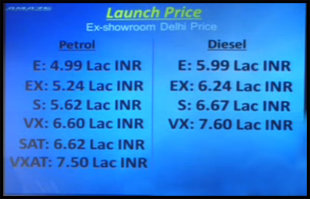
Amaze comes to the market with a tough assignment -- to regain Honda’s lost sheen. It’s not going to be an easy fight with the Maruti Dzire, a car that’s already a household name. But the Amaze has advantage in terms of space, mileage, appearance and above all, it has reliability of a Honda car. Now, Honda has priced the Amaze on par with the Dzire too. Hmm...looks like the Amaze is going to give Dzire a run for its money.

Monday, 7 July 2014

Road Test and Review: The All-New Honda City

Road Test and Review: The All-New Honda City


Just when we thought 2013 was full to the brim with fabulous new models, in drives the all-new Honda City with the biggest surprise of all – a mileage of 26 kilometre per litre. Yes, you read that right; the Honda City finally has a diesel engine under the hood, and now, the iconic car is also the most fuel efficient car in India. 

Well, if mileage is the need of the hour, City now offers the most of it. But there’s more to the story than meets the eye. Let’s discuss in detail.

Design

Although every body panel has gone under the knife, the fourth generation City looks very familiar.  Perhaps, Honda didn’t want to tamper with an already perfect design. But a closer look at the car reveals some remarkable design choices. The three-slatted signature grille has given way to a larger, chrome-heavy grille linking sharper headlamps. Two bold creases run down the bonnet, seamlessly converging into the grille. Thanks to the sportier and forward-reaching bumper styling, the new City looks poised to devour the road ahead. 

Contrary to the lackluster profile of the outgoing model, the new City gets a prominent character line that gracefully rises towards the rear to meet the elongated, wraparound taillights. The new taillight design works well with the overall styling and the shark fin antenna completes the picture.

Inside the cabin

Honda has always been stingy when it comes to City’s features.  Even when the competition grew too intense, the City’s cabin remained very basic. The new model is a huge leap forward over its predecessor and offers a host of innovative and segment-first features. The centre console now boasts a 5 inch LCD display with audio, Bluetooth and rear camera settings. The rear camera offers three angles – normal, top down and 180 degree wide. The touchscreen climate control looks super cool but bright sun bleaches it out, making it difficult to read. 


The CR-V inspired steering wheel is leather-wrapped and offers plenty of grip. It also houses Bluetooth, audio and cruise controls.  Instrument panel gets a new theme, too. All these are well appointed on a flowing and cohesive dashboard. 

No one ever cribbed about the City’s cabin space, yet Honda has increased the wheelbase by 50mm, shoulder room by 40mm and height by 10mm to make it as roomy as the D segmenters. The overall length and width, meanwhile, remain unchanged. Rear AC vents further enhance the rear seat comfort. The new City doesn’t fall short on other contemporary features such as push start button, keyless entry, four power outlets, 8 speakers, auto folding mirrors and sunroof on top trim levels.

Performance

The diesel City has borrowed the 1.5 L i-DTEC engine from the Amaze with the same tuning and the performance figures remain unchanged  - 100ps@3600 rpm and 200 N-m@1750 rpm. Power is transferred through a newly developed 6-speed manual gearbox, which helps the City achieve better fuel economy than the Amaze.

The i-DTEC motor feels more refined under the City’s bonnet because Honda has further reduced friction of all moving components. Moreover, the car benefits from as many as 14 new noise insulation methods that make the cabin brilliantly quiet. Power delivery is very similar to the Amaze, however, top speed is not limited to 145 kmph on the City and it can travel up to 190kmph, the company says.

The 1.5 L i-VTEC petrol engine has been Honda City’s forte and it gets even better in the fourth generation. Twin needle spark plugs, enhanced cooling system and low friction technology help the engine achieve better fuel efficiency. The petrol variant is available either with a five-speed manual or an advanced CVT auto transmission. Traditionally, most auto boxes are thirstier than manuals but the City’s CVT achieves a commendable 18 kmpl as against the manual variant’s 17.8 kmpl.

The rev-happy and instantly responsive nature of the manual i-VTEC makes it the most fun to drive among the three. The car is lighter by 40 kg, so it feels even faster. The CVT automatic, on the other hand, is very practical and easy to live with. It offers paddle shifters for a bit of zest, too. 

Similar to the Amaze, the diesel City offers smooth and effortless power delivery. Peak torque is delivered 1750rpm onwards, but there’s enough torque (up to 80%) available from a low 1200rpm. That means low-end response is impressive and there’s very little turbo lag. The engine pulls strongly till around 3500 rpm and is relaxed at highway speeds. If handled prudently, the diesel City is certain to return over 25kmpl. 

Ride and Handling

Honda City had an Achilles’ heel – poor ground clearance. At 165mm, it remains unchanged in the new City as well. However, Honda has reworked the exhaust pipe layout to improve the ‘ground contact factor’ that avoids frequent underbody scrapes. Revised suspension geometry ensures a more comfortable ride and the aforementioned noise insulation keeps NVH levels well under tolerable limits. New suspension setup, increased wheelbase and kerb weight haven’t taken a toll on handling either.

Honda’s desperate attempt to achieve higher fuel efficiency sees the car still ride on 175mm tyres, especially when all other C segmenters use 185mm or above. If only Honda considered broader tyres, the handling and overall appearance of the car could be even better.
Safety

Honda never compromises safety for anything. Like its predecessors, the new City gets dual front SRS airbags along with ABS with EBD across all the variants.

Conclusion

Diesel powered Honda City has always been on top of every car enthusiast’s wish list. Finally, when Honda introduced the diesel City, they nailed it in style. It’s undoubtedly a great, desirable package that gives you more bragging rights.

Saturday, 1 February 2014

Auto Expo 2014: 10 launches to watch out for

The 12th edition of the Auto Expo is all set to begin on 7th February. With as many as 70 new cars expected to break cover during the event, the 2014 Auto Expo will be the biggest India has ever witnessed. As we are gearing up for the comprehensive coverage, here’s a look at the 10 hottest launches to watch out for.


Auto Expo 2014: 10 launches to watch out for

Celerio will introduce Auto Gear Shift, which will have the flexibility of both manual mode and auto drive mode in the same car, with a simple shift of gear lever. Maruti claims a mileage figure of 23.1kmpl
Auto Expo 2014: 10 launches to watch out for

Hyundai Grand i10 was one of the most popular launches of 2013. Hot on the heels of this grand success, Hyundai will unveil a sedan version of the Grand
Auto Expo 2014: 10 launches to watch out for

Expected to be launched in February 2014, the Grand sedan will be priced aggressively to take on Honda Amaze and Maruti Dzire
Auto Expo 2014: 10 launches to watch out for

Nissan has re-launched the Datsun brand after 32 years. Datsun will launch its first car early this year called the Datsun GO. The Datsun GO will be priced under Rs. 4 lakhs in India and will be powered by a 1.2-litre, 3-cylinder engine, paired to a 5-speed manual gearbox
Auto Expo 2014: 10 launches to watch out for

The same engine does duty on the Nissan Micra Active, producing 68 PS and 104 Nm. However in the Datsun GO, the company might detune the engine in the interest of boosting fuel economy
Auto Expo 2014: 10 launches to watch out for

Honda will re-launch the revised Jazz in 2014. Although the first generation Jazz had a much-loved design, poor pricing resulted in bad sales
Auto Expo 2014: 10 launches to watch out for

The 2014 Jazz will certainly be aggressively priced and will also have the advantage of a diesel powertrain and a futuristic design
Auto Expo 2014: 10 launches to watch out for

VW's Taigun is likely to be the first car on the Up platform (codename: PQ12) to come to India. The Taigun concept, based on a stretched version of the VW Up's NSF (New Small Family) platform, made its debut at the Sao Paolo International Motor Show in October last year and previews VW's future SUV face
Auto Expo 2014: 10 launches to watch out for

With its bold, clean styling, the Taigun is sure to appeal to the Indian psyche. It looks a lot less radical than the Ford EcoSport and its less controversial lines are designed to appeal to everyone and offend no one. As for the interiors, VW designed it to resemble the simplicity of the latest smartphones. Its clean, minimalist look aims at being visually clear and simple to use
Auto Expo 2014: 10 launches to watch out for

Mobilio, the third car to be built on the Brio platform, marks Honda’s entry into the MPV segment in India. The Mobilio will be available with the 1.5-litre i-VTEC petrol and 1.5-litre i-DTEC diesel options
Auto Expo 2014: 10 launches to watch out for

Both engines will be mated to a five-speed manual transmission. The production version of the Mobilio is expected to be unveiled at the 2014 Delhi Auto Expo
Auto Expo 2014: 10 launches to watch out for

Audi is all set to unveil its A3 sedan at the Auto Expo. It is Audi’s first compact sedan in the luxury segment to come into the Indian market
Auto Expo 2014: 10 launches to watch out for

Along with the A3, Audi will also showcase special editions of Q3, Q5, the sportier SQ5, Q7 and its recently launched sports car Audi RS 7 Sportback
Auto Expo 2014: 10 launches to watch out for

The BMW 3 Series GT will be one of the most important launches by the Bavarian carmaker at the Delhi Auto Expo
Auto Expo 2014: 10 launches to watch out for

The GT model is 200mm longer, 50mm taller and 17mm wider than the regular 3 Series model. The GT 3 Series comes with a 2-liter diesel engine producing 184bhp, while the petrol variant gets 2.0-liter motor developing 245bhp of power output
Auto Expo 2014: 10 launches to watch out for

Mercedes-Benz India will unveil the dynamically styled Concept GLA and CLA45 AMG at the 12th edition of the Auto Expo. Focusing on the company’s ‘Year of Excellence’ strategy, Mercedes-Benz will also launch its first SUV Guard 
Auto Expo 2014: 10 launches to watch out for

The AMG 2.0-liter turbo engine, with a maximum output of 265 kW (360 hp) and up to 450 Newton meters of torque, is the most powerful turbocharged four-cylinder engine in series production in the world
Auto Expo 2014: 10 launches to watch out for

Hyundai will launch the new Santa Fe in India at the Auto Expo. The full-sized SUV is expected to undercut Toyota Fortuner in terms of pricing when it is launched. To achieve this Hyundai will assemble the Santa Fe at its Chennai plant
Auto Expo 2014: 10 launches to watch out for

The new Santa Fe will have a more appealing presence, derived from Hyundai’s fluidic design philosophy
Auto Expo 2014: 10 launches to watch out for